
Costs and margins6 min read
What a Remake Really Costs When Comparing Dental Labs
A lower per-unit lab fee can cost more once remakes, adjustments, and delays are counted. Here is a simple way to compare labs on cost per usable restoration.
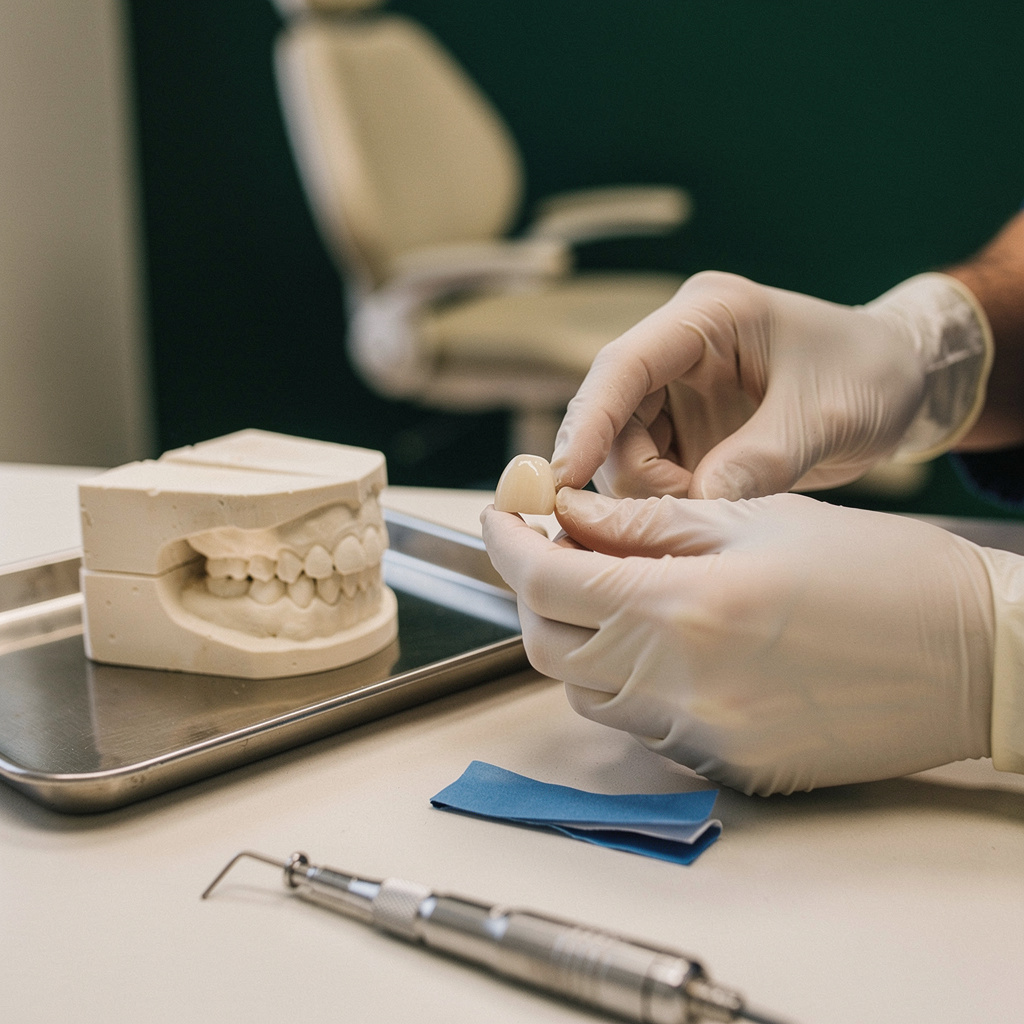
Most practices compare labs by looking at the price of a crown or bridge unit. It is the easiest number to find, and it is easy to compare. It is also an incomplete picture. A lab that is a little cheaper per unit can end up costing more if its cases come back needing remakes, heavy adjustments, or rework.
This article walks through how to estimate what a remake actually costs your practice, how to fold that into a lab comparison, and how to use the result when you set your lab budget.
Why the per-unit price misleads
The invoice from the lab covers what the lab charges you. It does not capture what a bad outcome costs you. When a restoration has to be redone, the lab may credit or redo it at no charge, and that can make the problem look free. It is not. Your practice absorbs most of the cost.
A useful comparison asks: what does it cost to get one restoration seated that does not need to be redone? Call that the cost per usable unit.
What a remake costs your practice
Start by listing the costs that do not show up on the lab invoice. For a typical indirect restoration, they include:
- Chair time. The extra appointment, or the extra time spent trying in and adjusting a restoration that does not fit. Chair time has a real value to your practice, based on what that block of the schedule would otherwise produce.
- Team time. Assistant and front desk time for re-preparing the room, rescheduling, calling the patient, and repacking and shipping.
- Materials. A new impression or scan, bite registration, temporary materials, and anything else consumed a second time.
- Shipping. Outbound and return shipping, plus any rush charges to recover lost time.
- Schedule disruption. Other patients who were bumped or kept waiting.
- Patient goodwill. Harder to measure, but real. A patient on a second temporary may be less patient about the next appointment.
You do not need perfect numbers. Estimate a reasonable per-remake figure based on your own chair-time value and your team's time, and write it down. A range is fine. The goal is to be roughly right instead of ignoring the cost.
Track your own remake data
Published claims from labs about their remake rates are hard to compare, because labs define and count remakes differently. Your own records are more useful. A simple log takes a few minutes a week:

- Date and lab.
- Case type (single crown, bridge, implant crown, partial, and so on).
- What went wrong, in a few words: open margin, contact too tight, shade mismatch, wrong material, missing information.
- Your best judgment of the cause category.
Sort causes into a few buckets:
- Fabrication issue at the lab. The work did not match the prescription.
- Prescription or communication gap. The lab built what the prescription said, but the prescription was unclear or incomplete.
- Impression or scan issue. The data sent was not adequate.
- Patient or clinical factors. Changes in the situation that neither side controlled.
The clinician's judgment decides what went wrong in any particular case. The log is just for spotting patterns. If most of your remakes fall into the communication bucket, switching labs will not fix it. Improving your prescriptions and case notes will. If they cluster around one lab and one case type, that is useful to know and worth raising with the lab.
A simple way to compare labs on cost per usable unit
Here is a basic formula:
Cost per usable unit = unit price + shipping per case + (remake rate x practice cost per remake that the lab does not cover)
The example below uses round numbers only to show the arithmetic. They are not benchmarks or typical prices.
Suppose Lab A charges 100 per unit and Lab B charges 88. Suppose that, in your own log, Lab A has needed a remake on about 3 in 100 cases and Lab B on about 8 in 100. Suppose a remake costs your practice about 300 in chair time, team time, and materials after any lab credit.
- Lab A: 100 + (0.03 x 300) = 109
- Lab B: 88 + (0.08 x 300) = 112
The lab that looked 12 cheaper on the invoice costs 3 more per usable unit. Change the assumptions and the answer can flip back. That is the point: the formula shows which inputs matter, so you can test them with your own numbers.
Two cautions. First, small samples are noisy. A handful of cases can swing a remake rate dramatically, so give a new lab a fair trial of a meaningful number of cases before drawing conclusions. Second, do not count remakes caused by your own prescriptions or data against the lab. Use the fabrication bucket, and treat communication issues as something to fix on both sides.
Costs beyond remakes
Remakes are the biggest hidden item, but not the only one. When you compare labs, also look at:
- Adjustment at seating. A restoration that is not remade but needs significant chair-side adjustment still costs time. Note when contacts or occlusion regularly need work.
- Turnaround reliability. Average turnaround matters less than how often a case arrives on the promised date. Late cases cost you rescheduled appointments.
- Rush and add-on fees. Ask what rush service, shade matching, model work, or special materials cost on top of the base fee.
- Shipping and pickup. Some labs include it; others add it per case.
- Remake policy. Find out the terms. Is the remake free? Is there a time window? Is it a credit or a redo? Who pays for shipping on the return? Policies vary a lot between labs.
- Responsiveness. How quickly does the lab answer a question about a case? A quick reply can prevent a remake.
- Digital workflow fit. If you scan, confirm the lab accepts your files without conversion problems or extra charges.
Questions to ask a lab before you switch
- What is your remake policy, and what does it cover?
- How do you handle a case when the prescription is unclear: do you call, or build to your best reading?
- What is your typical turnaround for this case type, and what happens when you miss it?
- Are there fees for rush, shade verification, or file conversion?
- Who is my contact when something goes wrong?
Notes on the answers are more valuable than the sales pitch. A lab that explains its process clearly is usually easier to work with.
Putting it into your budget
Once you have a few months of data, the budget gets more realistic:
- Budget lab spend by case type, using actual unit prices from your invoices.
- Add a line for remake and adjustment cost, using your own rate and cost estimates. Do not hide it inside production costs where nobody sees it.
- Review quarterly by lab. If one lab's cost per usable unit is clearly higher, talk to them with your log in hand before deciding to leave.
- Consider splitting work. Some practices send routine single units to one lab and complex cases to another, based on each lab's track record.
For lab owners
If you run a lab, you can use the same logic in your favor. Be clear about your remake policy in writing. Ask for feedback when a case comes back, and track the causes on your side too. If your prescriptions often arrive incomplete, a simple checklist for your clients can lower your own remake rate. Practices notice labs that make the process easier, and they are often willing to pay a modest premium for it.
Where a marketplace can help
Comparing labs fairly is easier when prices are visible and the order history is in one place. On Dintle, practices can compare labs, see per-case prices up front, send cases, and track orders through delivery, which makes it simpler to keep the records this kind of comparison depends on.
Whatever tools you use, the habit matters most: write down what each case actually cost you, not just what the lab billed.