For dental labs6 min read
A Packing and Shipping Checklist for Dental Lab Cases
Most shipping damage is preventable. Use this packing, labeling, and carrier checklist to get restorations to the practice intact and on time.
A restoration that is perfect on the bench and cracked, lost, or late on arrival is still a failed case. The practice does not see your quality control. It sees what comes out of the box. Shipping is also one of the cheapest parts of lab operations to improve, because most problems come from a handful of repeatable habits.
This checklist is for lab owners and shipping or QC staff. Adjust it to your products and carriers.
Start with the failure modes
Before changing anything, list what has actually gone wrong in the last few months. Pull your remake and credit records and look for entries like these:
- Chipped porcelain or cracked margins on arrival
- Restorations rattling loose in a box
- Wrong case in the right bag, or two cases mixed together
- Missing models, dies, or opposing arch
- Delivered after the seat appointment
- Packages left somewhere the practice could not find them
If you have not been recording why a case came back, start now with a simple column: "damaged in transit," "mislabeled," "late delivery," "other." Without it you are guessing which fix matters most.
Packing: protect the thinnest, most fragile part
The goal is that nothing can move, touch another piece, or take an impact directly.
Restorations
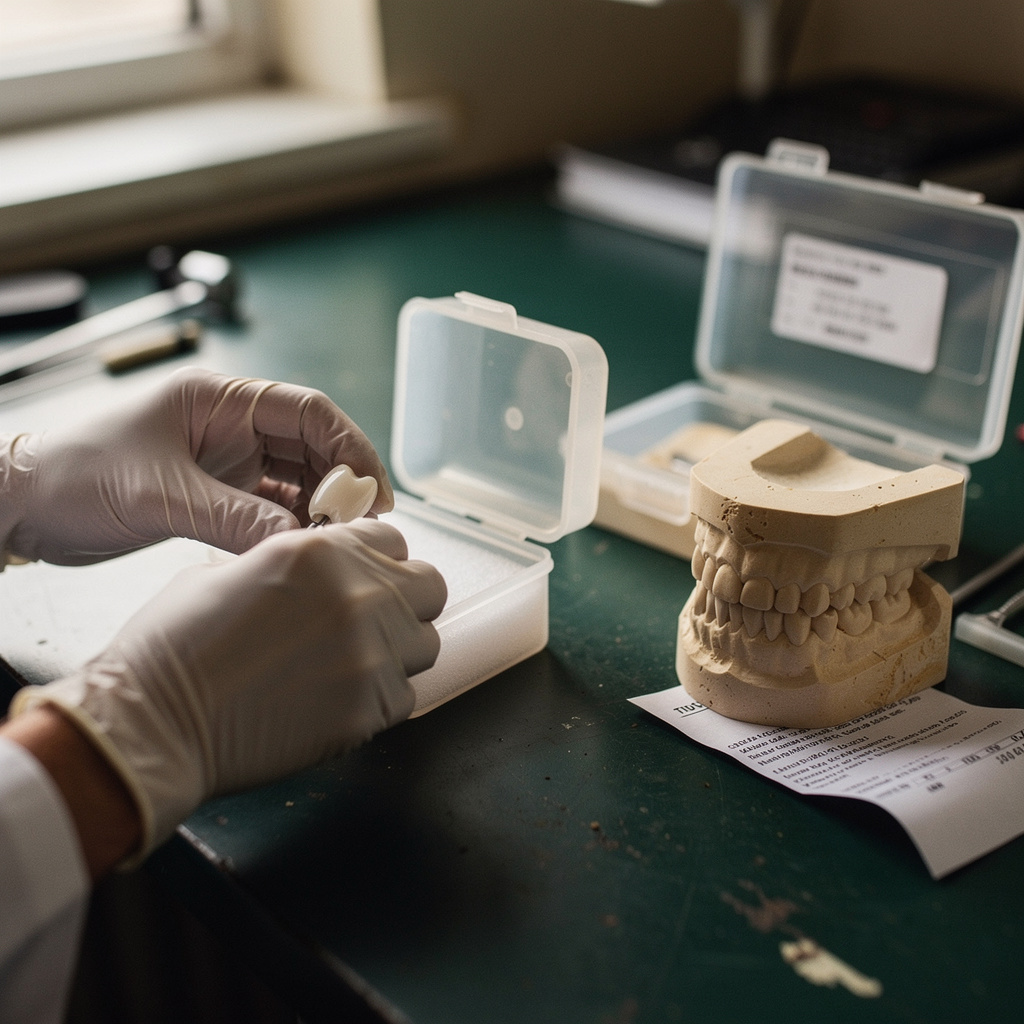
- Put each unit or case in its own rigid container, such as a hinged crown box or a lidded case tray. Do not rely on a bag alone for anything with porcelain, thin margins, or a delicate pontic.
- Support restorations so they do not rest on their margins. Foam or a purpose-made insert works better than loose tissue.
- Keep dies, models, and restorations in separate compartments or separate bags inside the same case box. Hard stone against ceramic is a common chip source.
- For multi-unit bridges and long-span work, include the model or a stabilizing support if that is your normal practice, so the piece is not flexed in transit.
Models, dies, and articulation
- Pack articulated models so the upper and lower cannot knock against each other. Secure them with the method your lab uses, and check that mounting plates are not loosened by handling.
- Bag dies together and label the bag with the case number.
- If the practice sent a bite registration, return it with the case unless you have agreed otherwise.
Outer packaging
- Use a rigid outer box or a padded mailer rated for the contents. A thin envelope with a hard case inside will get crushed.
- Fill voids. If you can shake the inner box and feel it slide, add filler.
- Put the packing slip inside the box, and a second copy or a clear label on the outside.
Heat and pressure-sensitive items
Acrylic try-ins, wax set-ups, and some appliances can distort with heat or pressure. If you ship in summer or to hot regions, avoid leaving packages in vehicles, and tell the practice to unpack promptly. Ask your material manufacturer for handling guidance rather than assuming.
Labeling: make the case impossible to confuse
A practice may open several lab boxes in the same morning. Make each one self-explanatory.
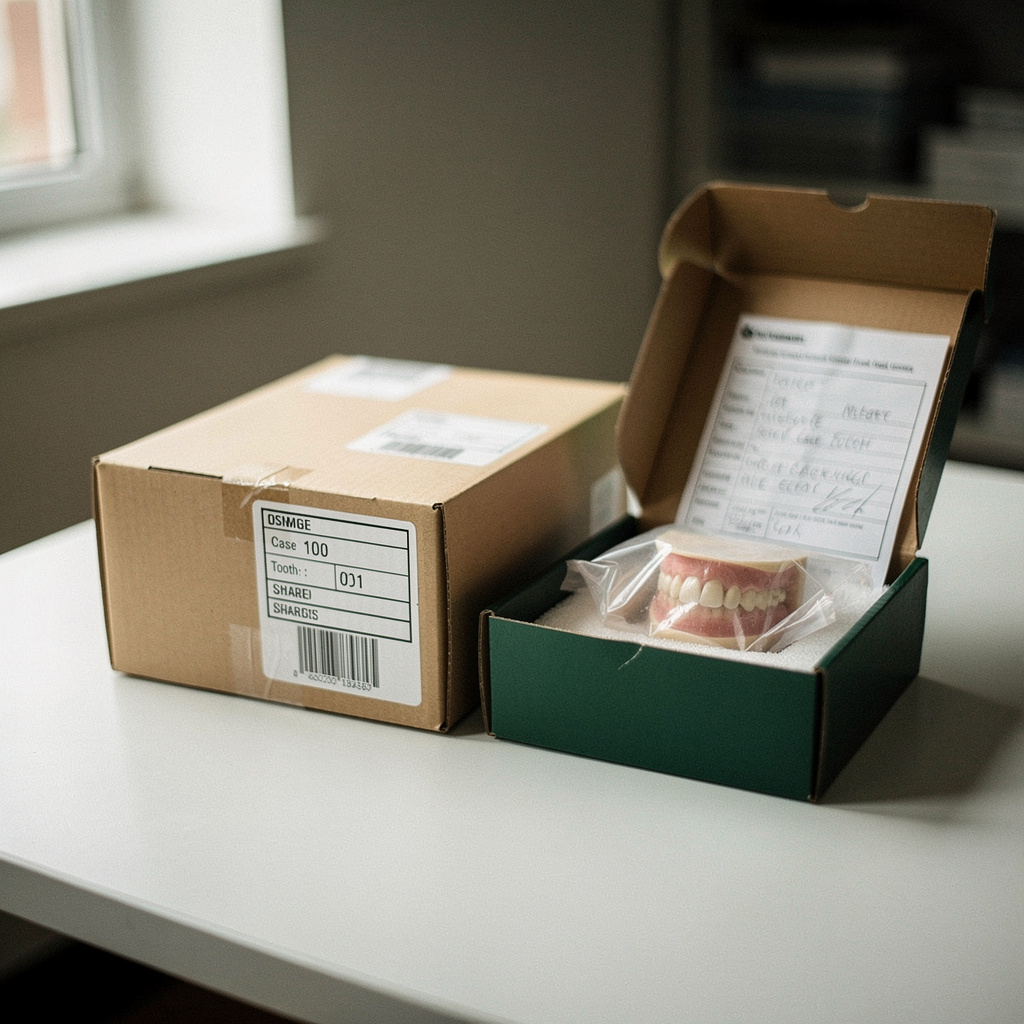
Every case should carry:
- Your case number, matching the one on the prescription and any tracking page
- Practice name and doctor
- Patient identifier in the format the practice uses (many prefer initials or a case ID over a full name; ask them)
- Restoration type, tooth numbers, and shade
- Due date or seat date, if given
Then add one line the practice will actually read: a short "what is in this box" list. For example: "1 crown #8, 1 model, 1 opposing model, 1 bite." Staff can check it in ten seconds, and any missing item becomes obvious right away rather than at the chair.
Infection control before the box is closed
Work leaving the lab should be handled according to your infection-control procedures and the requirements that apply where you operate. Those vary, so confirm yours with your regulator or advisor rather than relying on a general rule. Whatever your process is, make it visible. A small label or slip noting that the case was disinfected, with the date, saves the practice from wondering and saves you a phone call.
The same applies to incoming cases. If impressions or appliances arrive without any indication of disinfection, have a standard way of handling and flagging that.
Photograph before you seal
Take a quick photo of the finished case in its packaging, with the label visible. It takes under a minute and helps in three ways:
- It settles "was it damaged when it left?" disputes
- It supports a carrier damage claim
- It lets your QC person catch a missing item before pickup
Store the photo against the case number so anyone can find it later.
Choose carriers and cutoffs deliberately
The cheapest service is not always the cheapest outcome. A remake and re-ship usually costs far more than the difference between service levels.

Decide, per practice or per region:
- Carrier and service level. Courier, regional carrier, or national carrier. Ask practices which has been reliable at their address.
- Pickup cutoff. Cases finished after the cutoff ship the next business day. Make sure your quoted turnaround accounts for this, and do not count a case as shipped until it has been scanned by the carrier.
- Delivery target. Aim to arrive at least a day before the seat appointment when you know the date. That leaves room for one delay.
- Signature or delivery instructions. For high-value cases, require a signature or specify a drop location. Check the practice's front desk hours so the box is not sitting on a doorstep or in a closed office.
- Declared value or insurance. Carrier coverage rules and limits differ, so read the terms for what you ship. Know what is covered and what documentation they require.
Send tracking information every time
Email or message the tracking number the day the case ships. Include the case number, expected delivery date, and what is in the box. Practices that can see an order is on its way do not call to ask where it is, and your front desk is not interrupted.
If a package stalls or is flagged as delayed, tell the practice before they ask. Offering a plan, such as a replacement or a rush shipment on the next piece, keeps the relationship intact even when the carrier is at fault.
Make returns easy
Inbound shipping causes damage too, especially to impressions and models on the way to you.
- Give new practices a simple instruction sheet: what to pack, how to protect impressions, and where to put the prescription.
- Offer prepaid labels or branded boxes if your volume justifies it, so staff are not improvising with whatever box is around.
- Ask practices to include a contact name and phone number on the outside of the box.
A poorly packed incoming case is not always the practice's fault. If it happens, send gentle, specific feedback with a photo, not a general complaint.
Handle damage claims the same way every time
When a case arrives damaged:
- Ask the practice to photograph the outer box, inner packaging, and the damage before discarding anything.
- Keep the packaging until the claim is resolved.
- Pull your pre-shipment photo.
- File with the carrier within their claim window, which varies.
- Start the replacement immediately; settle who pays afterward.
Fast replacement matters more to the practice than who is at fault.
A short weekly routine
You do not need a big project. Try this for a month:
- Record every transit-related problem with a one-word cause.
- Review the list every Friday for ten minutes.
- Change one thing at a time, such as swapping a box type, adding a packing list line, or moving the pickup cutoff.
- Ask your two or three highest-volume practices what they would change about how your cases arrive.
If you list your lab on a marketplace such as Dintle, where practices compare labs, see per-case prices up front, send cases, and track orders, clean packaging and prompt tracking updates become part of how practices judge you before they ever see the work. Either way, the box is your last chance to make a good impression, so make it a deliberate one.